
Volkswagen approves plan to cut 100,000 jobs by 2030
Volkswagen’s supervisory board has approved a restructuring that raises planned job reductions to 100,000 and could leave four German plants without guarantees beyond 2030.
In short
- Volkswagen’s supervisory board has approved a restructuring that raises planned job reductions to 100,000 and could leave four German plants without guarantees beyond 2030.
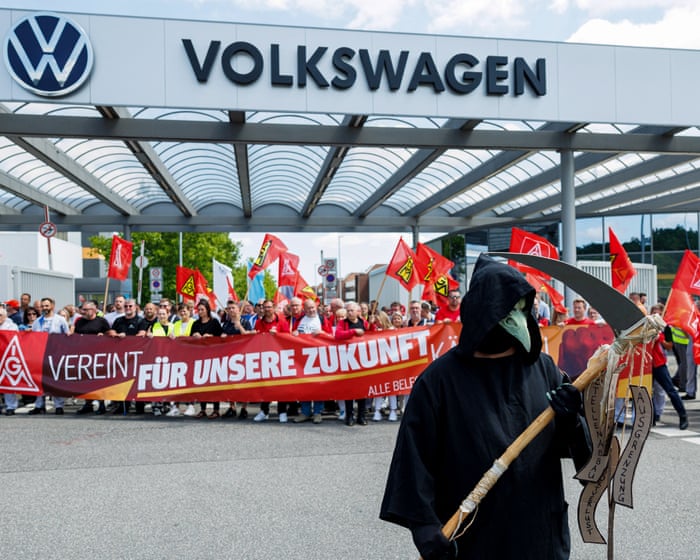
Volkswagen has approved plans to reduce its global workforce by 100,000 jobs by the end of 2030, deepening a restructuring at Europe’s largest carmaker as it confronts weaker sales, US tariffs and intensifying competition from Chinese manufacturers.
The company said on Thursday, September 3, 2026, that its supervisory board unanimously backed a plan agreed by management and unions to eliminate about 50,000 additional positions. Those reductions come on top of 50,000 jobs already scheduled to go.
The total represents roughly 15 percent of Volkswagen Group’s workforce of more than 650,000 people. The group includes Volkswagen, Audi, Bentley, Porsche, Skoda, Seat, Cupra and Lamborghini.
Volkswagen also plans to halve the number of vehicle models produced across the group. The company said the long-term future of four German plants — Hanover, Emden, Zwickau and Neckarsulm — cannot be guaranteed into the 2030s, although it did not announce immediate closures.
Chief executive Oliver Blume described the supervisory board’s approval as a strong signal for the group’s future. The company said staffing levels must be aligned with its economic position.
The restructuring follows years of pressure from excess production capacity and declining profitability in Europe. Volkswagen is also contending with lower sales in China, stronger Chinese competition in European markets and higher US trade barriers.
The scale and timing of the reductions will make the plan a major test of relations between Volkswagen management and its powerful labour representatives. Workers booed Blume during a visit to the company’s Wolfsburg headquarters in August as he discussed the group’s financial challenges.


