1847 Letter Points to Post-Abolition Trafficking of Africans to Guyana, Author Says
A newly highlighted company letter records 324 Africans carried to British Guiana in 1847, evidence author Malik Al Nasir says shows illegal trafficking by Sandbach, Tinne and Company decades after Britain banned the slave trade.
In short
- A newly highlighted company letter records 324 Africans carried to British Guiana in 1847, evidence author Malik Al Nasir says shows illegal trafficking by Sandbach, Tinne and Company decades after Britain banned the slave trade.
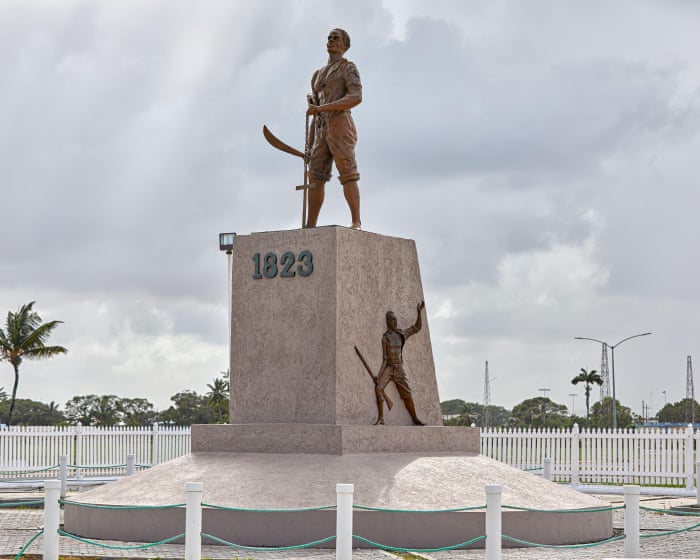
A company letter written in 1847 records a ship carrying 324 Africans, including 123 children, to Demerara in present-day Guyana—evidence that author and researcher Malik Al Nasir says points to illegal trafficking decades after Britain outlawed the slave trade.
The document was sent by Peter Miller Watson, who managed the interests of Sandbach, Tinne and Company in Demerara, to the firm’s Liverpool office. According to reporting published on August 23, the letter described the Parker, a ship in the company’s fleet, arriving with 115 adult men, 86 adult women, 82 children under 14 and 41 children under four. It also recorded the deaths of one man and two children during the voyage.
Al Nasir discusses the letter in his book “Searching for My Slave Roots.” He argues that the wording of the document—particularly its description of the Africans as cargo and the treatment of deaths as losses—supports the conclusion that they were trafficked from Africa rather than travelling as free passengers or as Africans liberated by the Royal Navy.
That conclusion is an interpretation of the archival evidence. The report did not identify a court finding or other official determination concerning the 1847 voyage.
Britain prohibited the slave trade in its territories under the Slave Trade Act of 1807 and abolished slavery in most of the British Empire under legislation passed in 1833. Sandbach Tinne and related interests had received compensation for enslaved people before the letter was written; formerly enslaved people received no compensation.
The firm was closely tied to the Sandbach, Tinne and Gladstone families, whose commercial interests were prominent in the Demerara sugar trade. Descendants of the Sandbach and Gladstone families have apologised for their ancestors’ involvement in slavery, according to the report. Sandbach Tinne was wound up in 1975.
The discovery has also helped inspire “Overwriting–Underwriting,” a research project examining the financial networks behind enslavement. The initiative was scheduled to launch at the Museum of Liverpool on August 23, the United Nations Educational, Scientific and Cultural Organization’s International Day for the Remembrance of the Slave Trade and its Abolition.
The pilot forms part of National Museums Liverpool’s Connector project and is supported by a £1 million grant from the Lloyd’s Register Foundation. Its research draws on Al Nasir’s work on Sandbach Tinne and University of Liverpool researcher Lucy Moynihan’s study of insurance records linked to plantation owner John Gladstone.