Police raid Starbucks Korea headquarters over ‘Tank Day’ campaign
South Korean police searched Starbucks Korea’s headquarters following complaints that a marketing campaign trivialised the 1980 Gwangju pro-democracy uprising.
In short
- South Korean police searched Starbucks Korea’s headquarters following complaints that a marketing campaign trivialised the 1980 Gwangju pro-democracy uprising.
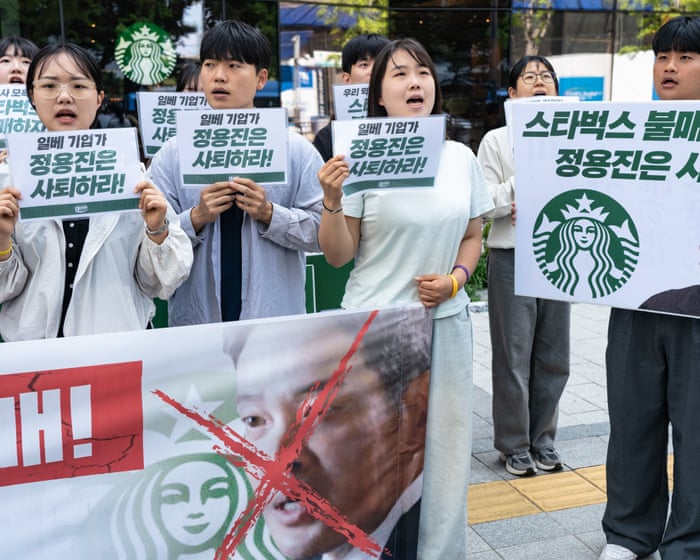
South Korean police have searched Starbucks Korea’s headquarters as part of an investigation into a marketing campaign that drew accusations of trivialising the country’s struggle for democracy.
Investigators raided the company’s office in southern Seoul on Tuesday, August 4, police said the following day. South Korean media also reported searches of executives’ homes, although authorities released no further details about the investigation.
The controversy began when Starbucks Korea promoted stainless-steel reusable tumblers under the name “SS Tank” and designated May 18 as “Tank Day.” May 18 is the anniversary of the 1980 Gwangju uprising, when pro-democracy demonstrators were violently suppressed by South Korea’s military-backed government.
The campaign also used a slogan translated as “Thwack it on the table.” Critics associated the wording with a police explanation issued after student activist Park Jong-chul died under torture during an interrogation in 1987.
Shinsegae Group, which owns 67.5 percent of Starbucks Korea, cancelled the promotion within hours of the backlash. The company dismissed Starbucks Korea’s chief executive, while Shinsegae chair Chung Yong-jin later delivered a televised apology.
Starbucks Korea subsequently closed its stores nationwide on June 22 for mandatory training on history and social awareness.
Police opened the investigation after complaints from relatives of victims of the Gwangju crackdown. Official records put the death toll from the 1980 suppression at about 200.
The Gwangju uprising remains a defining event in South Korea’s democratic history. The country’s transition accelerated in 1987, when months of nationwide protests compelled the authoritarian government to accept constitutional changes providing for direct presidential elections.