
Soil fungus shows promise against destructive African armyworm
South African research indicates a naturally occurring soil fungus could help control mature African armyworms, though further testing is needed before farmers can use it as a treatment.
In short
- South African research indicates a naturally occurring soil fungus could help control mature African armyworms, though further testing is needed before farmers can use it as a treatment.
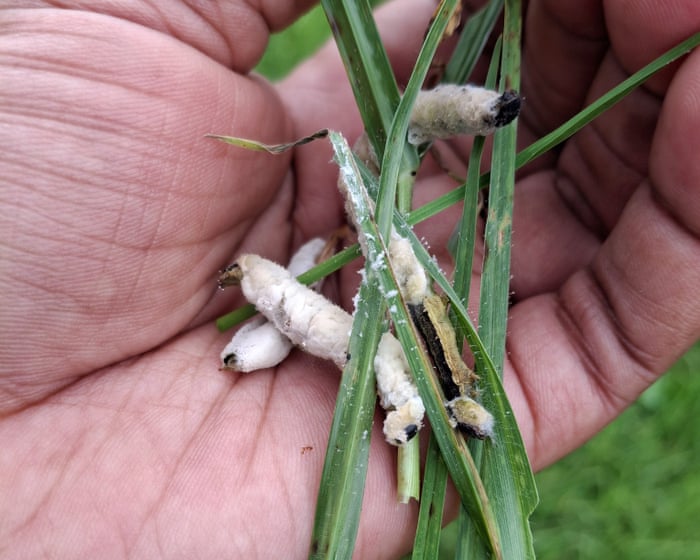
A naturally occurring soil fungus identified during an African armyworm outbreak in South Africa could offer farmers a new biological tool against the crop pest, according to research reported on August 12, 2026.
Entomologist Letodi Luki Mathulwe began investigating after dead caterpillars covered in a white substance were found in Kikuyu grass fields in KwaZulu-Natal during a 2025 outbreak. Laboratory work by her team linked the deaths to the fungus, and the findings have since been presented in a peer-reviewed research paper, The Guardian reported.
The African armyworm, Spodoptera exempta, damages maize, sorghum and grazing land across eastern and southern Africa. Existing chemical controls can work during early stages of the caterpillar’s life, but mature infestations are harder to manage. The pest can also affect livestock indirectly by prompting chemical changes in grass that may make cattle ill.
Mathulwe said the fungus could eventually be developed into a product for future outbreaks. The finding is preliminary, however: additional testing and product-development work are required before it can be recommended for routine farm use.
The research is significant for a region where armyworm outbreaks can sharply reduce harvests, raise food prices and strain public budgets. A 2017 outbreak was estimated to have destroyed as much as 40 percent of Zambia’s maize production.