Uganda Starts Emergency Food Distribution as Hunger Crisis Deepens in Karamoja
Uganda has begun distributing emergency food in the drought-hit Karamoja region after at least 19 reported hunger deaths, with 1.5 million people facing acute shortages and rising malnutrition.
In short
- Uganda has begun distributing emergency food in the drought-hit Karamoja region after at least 19 reported hunger deaths, with 1.5 million people facing acute shortages and rising malnutrition.
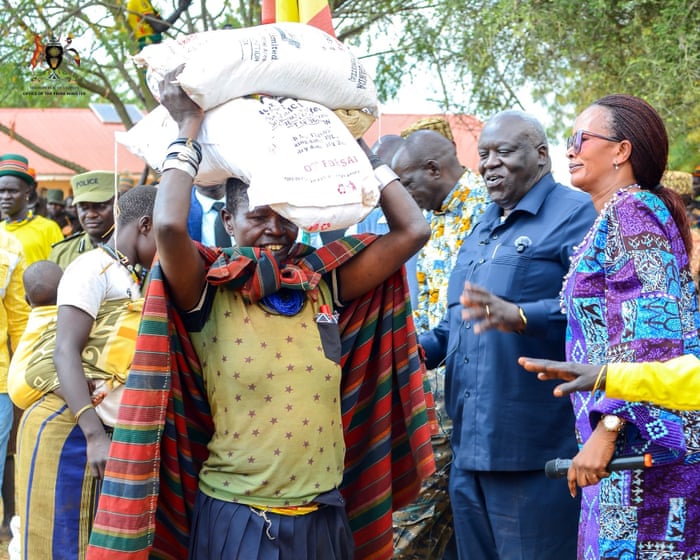
Uganda has launched an emergency food distribution operation in the eastern Karamoja region after at least 19 hunger-related deaths were reported amid prolonged drought and widespread crop failure.
The government plans to distribute 9,400 tonnes of food over two months using 45 billion Ugandan shillings in emergency funding approved by parliament. Disaster Preparedness Minister Sam Engola launched the operation on Wednesday, July 22, at a primary school in Lodiko sub-county, Kaabong district, according to reporting by The Guardian.
Karamoja’s roughly 1.5 million residents are facing acute food shortages and rising malnutrition after expected seasonal rains failed. The region’s last meaningful rainfall was recorded in April, at the start of the planting season, leaving farmers with severe crop losses.
The Famine Early Warning Systems Network has classified conditions across Karamoja at crisis level. Health facilities are treating hundreds of children for severe malnutrition, while a nutrition report published in June found that nearly half the population in Kaabong and Kotido districts was experiencing crisis conditions.
The current dry spell is described as the region’s most severe in years. Food insecurity in Karamoja is recurrent and is linked to climate shocks, environmental degradation, poverty and low agricultural productivity. Uganda’s human rights commission reported that a previous hunger crisis in 2022 caused more than 2,200 deaths.
The government says the immediate distribution will be followed by longer-term measures under the recently approved Karamoja regional development plan. Karamoja Affairs Minister John Baptist Lokii said authorities would provide drought-resistant, disease-resistant and early-maturing seeds before the next planting season.
Uganda is also responding to a broader reduction in international humanitarian assistance. Funding cuts have forced the World Food Programme to phase out food aid for 63% of the country’s refugee population, affecting more than one million people, while reducing rations for 663,000 recipients.
Food-rights advocates welcomed the government’s leadership but said emergency supplies alone would not resolve the underlying crisis. They called for sustained investment in water infrastructure, climate resilience and agricultural production to reduce Karamoja’s exposure to repeated drought-related emergencies.