Artemis II crew awarded Congressional Space Medal of Honor
The four Artemis II astronauts received the United States’ highest space honor on 28 August after their April lunar flyby, which took humans closer to the Moon than any mission in more than half a century.
In short
- The four Artemis II astronauts received the United States’ highest space honor on 28 August after their April lunar flyby, which took humans closer to the Moon than any mission in more than half a century.
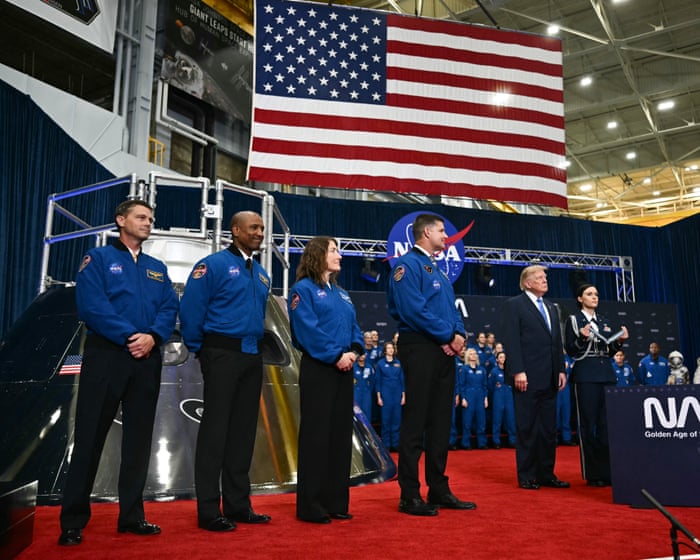
The four astronauts who flew NASA’s Artemis II mission around the Moon in April received the Congressional Space Medal of Honor on Friday, 28 August, at Johnson Space Center in Houston.
Commander Reid Wiseman, pilot Victor Glover and mission specialist Christina Koch of the United States, along with Canadian mission specialist Jeremy Hansen, were recognized for completing the first crewed lunar voyage in more than 50 years.
The Artemis II crew travelled aboard NASA’s Orion capsule and came within 4,067 miles, or 6,545 kilometres, of the Moon. Their flight also established a new human distance record and marked the first crewed launch on NASA’s Space Launch System rocket.
President Donald Trump presented the medals during a ceremony attended by NASA administrator Jared Isaacman, astronauts and other officials. The award is the United States’ highest honor for spaceflight achievement.
Only 30 astronauts had received the medal before the Artemis II crew. Previous recipients include Apollo 11 commander Neil Armstrong, John Glenn and Alan Shepard. The most recent awards before Friday went to Doug Hurley and Bob Behnken for the 2020 crewed SpaceX test flight that restored the United States’ ability to launch astronauts from its own territory.
Artemis II tested systems intended for later missions. NASA plans an Artemis III docking rehearsal in Earth orbit next year, followed by a potential crewed lunar landing near the Moon’s south pole under Artemis IV as early as 2028.
The agency’s longer-term objective is a sustained human and robotic presence near the lunar south pole, where permanently shadowed craters may contain water ice that could support crews and be processed into rocket fuel.